





Article: Labrador Tea, treasure of the boreal forest: a complete guide to its benefits and secrets
Labrador Tea, treasure of the boreal forest: a complete guide to its benefits and secrets
Introduction To The World of Labrador Tea
Imagine yourself walking in the heart of Quebec's boreal forest. The air is crisp, pure, filled with the scents of pine resin and damp earth. Beneath your feet, a carpet of moss and lichen stretches to infinity. It is here, in these wild and majestic landscapes, that a priceless botanical treasure grows: Labrador Tea .
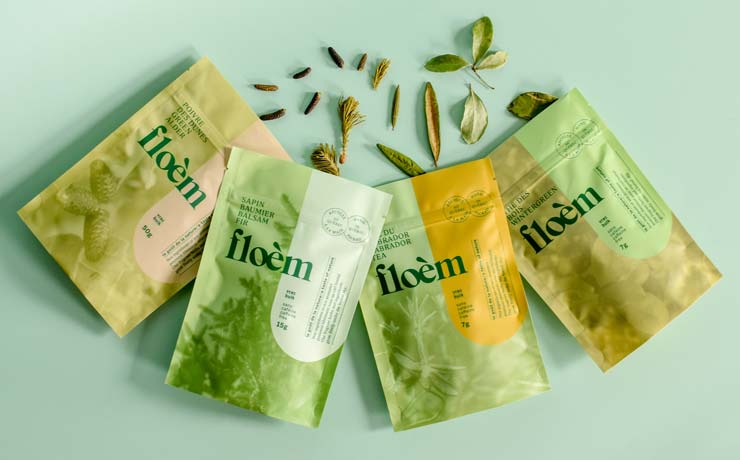
At Floèm, we have made this iconic plant the heart of our passion. More than just an infusion, Labrador tea is an invitation to travel, a direct connection with the northern territory that shelters us.
For centuries, long before modern science studied its complex molecules, Indigenous peoples knew the value of this evergreen shrub. It was not only a comforting drink against harsh winters; it was a cornerstone of traditional medicine.
Today, rediscovering Labrador tea means embracing a natural heritage, a unique flavor, and a multitude of benefits for body and mind. Let yourself be guided through the secrets of this fascinating plant.

Labrador Tea: An Introduction
Labrador tea is much more than just a wild plant; it's a symbol of the resilience of northern flora. Capable of surviving extreme temperatures and thriving in poor, acidic soils, it embodies the quiet strength of nature. To the uninitiated, it may seem like just another small shrub, but to the discerning eye, it holds a wealth of culinary and therapeutic potential.
Its growing popularity in gastronomy and wellness is no accident. In a world seeking authenticity and local products, Labrador tea stands out as an exceptional alternative to imported teas.
It offers a sensory experience unlike any other, telling with every sip the story of the peat bog where it grew.
What is Labrador Tea?
Labrador tea is not a " tea " in the strict botanical-legal sense of the term, because it does not come from the Camellia sinensis , the tea tree, is native to Asia. It is more accurately described as an herbal tea or infusion prepared from the leaves of a small, evergreen shrub in the family... Ericaceae , the same family as blueberries and cranberries. It is a plant native to North America, particularly abundant in boreal and subarctic zones.
We are often asked, “ Is Labrador tea an Indigenous tea? ” The answer is a resounding yes. It is intrinsically linked to the history of the First Nations who consumed and used it long before the arrival of Europeans. It is a hardy plant that forms dense colonies, creating a low canopy characteristic of coniferous forests and wetlands. Unlike oxidized or fermented commercial teas, Labrador tea is often consumed in its purest form: the whole dried leaf.
What Does Labrador Tea Taste Like?
Defining the taste of Labrador tea is a poetic exercise. Its aromatic profile is complex and evolves depending on the time of harvest and the drying method. Initially, one often perceives resinous notes reminiscent of fir or spruce, an unmistakable signature of the boreal forest. These woody notes are quickly followed by citrus accents, evoking grapefruit or lemon, which bring a surprising freshness.
At the finish, one often discovers a slightly mentholated, even spicy touch, which leaves a sensation of cleanliness and vibrancy. Some even detect soft floral nuances, reminiscent of jasmine, especially when the plant has been picked at the time of flowering.
This is a full-bodied infusion, without the harsh tannic bitterness found in some over-steeped black teas. It's a wild yet refined taste that grows on you and reveals itself anew with each cup.
What Are The Origins And Historical Overview of Labrador Tea?
The history of Labrador tea is deeply rooted in North American soil. Indigenous peoples, including the Cree, Innu, and Inuit, have used it for millennia. For these nations, Labrador tea (often called kacipauk Or maskekopak (depending on the dialect) was a panacea: it was drunk to warm up, to treat various ailments, or simply for the pleasure of its aroma.
During the colonial era, particularly during the American Revolution and the various taxes imposed on tea imported from England, settlers turned to this local resource as a patriotic and economical substitute, sometimes calling it "freedom tea." However, this utilitarian use long obscured its true value. Only recently, with the rise of boreal cuisine and the renewed appreciation of ancestral knowledge, has Labrador tea regained its prestige, evolving from a "grandmother's remedy" to a prized gastronomic ingredient.

The Main Benefits of Labrador Tea: Edible, Medicinal, Wellness
Interest in Labrador tea goes far beyond mere botanical curiosity. It's a versatile plant that finds its place in both the natural medicine cabinet and the pantries of Michelin-starred chefs. Its richness in essential oils and active compounds makes it a multi-purpose ally.
Whether it's to soothe indigestion after a heavy meal or to add a touch of Nordic exoticism to a dish, Labrador tea delivers. At Floèm, we believe this versatility is the key to its current success. It allows modern humans to reconnect with the simple and powerful resources of nature.
Labrador Tea As An Herbal Tea
Labrador tea is best known and most commonly consumed as an herbal tea. A frequent question is, "Does Labrador tea contain caffeine?" The answer is no. Unlike green or black tea, Labrador tea is naturally caffeine-free and theine-free. This makes it an ideal beverage for the evening or for people sensitive to stimulants.
Prepared as an infusion , it releases a golden, sometimes slightly amber, liquor. It's the ultimate comfort drink. It can be enjoyed hot to ward off winter chills, or iced in summer, enhanced with a drizzle of maple syrup or a slice of lemon for a refreshing and invigorating beverage. Its lack of caffeine doesn't mean it lacks effect: it offers gentle relaxation without making you drowsy.
Labrador Tea In The Kitchen
In the kitchen, Labrador tea is an aromatic chameleon. Chefs are increasingly using it as a boreal spice. The dried leaves can be ground and used to rub game such as venison or moose, or to flavor salmon gravlax. The plant's lemony notes pair beautifully with oily fish and seafood.
But its uses aren't limited to savory dishes. In desserts, Labrador tea works wonders. Infused in cream for a panna cotta, incorporated into a berry sorbet, or used to flavor caramel, it brings a herbaceous complexity that balances the sweetness. It's an ingredient that inspires creativity, transforming an ordinary dish into a forest-inspired gastronomic experience.
Labrador Tea for Health
The medicinal profile of Labrador tea is impressive. Historically, the question has often been asked: "Which tea has the most health benefits?" While every plant has its virtues, Labrador tea stands out for its high concentration of antioxidants. It is traditionally recognized for its anti-inflammatory and antimicrobial properties.
It has long been used to treat respiratory ailments, sore throats, and persistent coughs. Its ability to soothe stomach upsets and act as a mild diuretic also makes it a useful detoxifying agent. However, like any active plant, it must be used with knowledge and respect, a topic we will discuss later in the precautions for use section.
Labrador Tea For Well-Being (Aromatherapy)
Beyond its use in drinking, Labrador tea has its place in the world of olfactory well-being. Its essential oils, rich in terpenes, release a powerful aroma that promotes grounding and relaxation. While the pure essential oil is very potent and requires strict precautions for use, using the raw plant in a steam bath or as an aromatic sachet is very soothing.
Its aroma is believed to have calming properties for a troubled mind. Breathing in the vapors of a hot boreal infusion of Labrador tea can help clear the airways while soothing the mind, creating a bubble of serenity comparable to a silent walk in the forest.

Everything You Need to Know About The Labrador Tea Ingredient
To fully appreciate this product, one must understand its true nature. Labrador tea is not simply a herb; it is a complex shrub adapted to harsh living conditions. Its biology is a marvel of adaptation to the northern climate.
Labrador Tea: Botanical Name, Synonyms
Botanical nomenclature can sometimes be confusing, as science evolves and classifications change. It is important to correctly identify the plant to avoid confusing it with other visually similar but potentially toxic species, such as the narrow-leaved Kalmia.
The Scientific name and Etymology of Labrador Tea
For a long time, Labrador tea was classified under the Latin name of Ledum groenlandicum . It is still under this name that it is found in many old herbal texts. However, recent genetic analyses have led botanists to reclassify it in the genus Rhododendron . Its current and correct scientific name is therefore Rhododendron groenlandicum .
The etymology of Ledum comes from Greek ledon , referring to a resinous plant, while Greenlandicum simply means "from Greenland," highlighting its northern geographic distribution. The change to Rhododendron (which means "rose tree") makes it similar to azaleas and other ornamental rhododendrons, although its flowers are much more modest.
Where Does the name Labrador Tea and Other Common Names Come From?
The common name "Labrador tea" comes directly from the Labrador region of Canada, where the plant is very abundant and where early European explorers observed its use by locals. It is also sometimes called "marsh tea" or "Greenland Labrador tea".
Beware of linguistic confusion: sometimes we see searches for "labradorite" in connection with tea. Does labradorite have any negative effects? What are the properties of labradorite? It's crucial to clarify here that labradorite is a mineral, a stone with bluish reflections, and has nothing to do with the plant, except for the geographical origin of the name. You don't drink labradorite! If you're looking for the stone's properties, they fall under the umbrella of lithotherapy (protection), but for our plant, we're talking about phytochemistry.
Where Does Labrador Tea Come From? (indigenous origin)
THE Rhododendron groenlandicum It is a species native to North America. Its range is vast: it extends from Greenland to Alaska, covering almost all of Canada and reaching into the northern United States. It is a plant that has co-evolved with boreal ecosystems. It was not imported; it is at home here, a silent witness to the geological and human history of the continent.

Detailed Description of Labrador Tea and Natural Habitat
To pick or identify Labrador tea, you need a keen eye. It's a shrub that blends into the landscape but has unique characteristics, designed to withstand cold and wind desiccation.
What Does Labrador Tea Look Like? (visual appearance and shape)
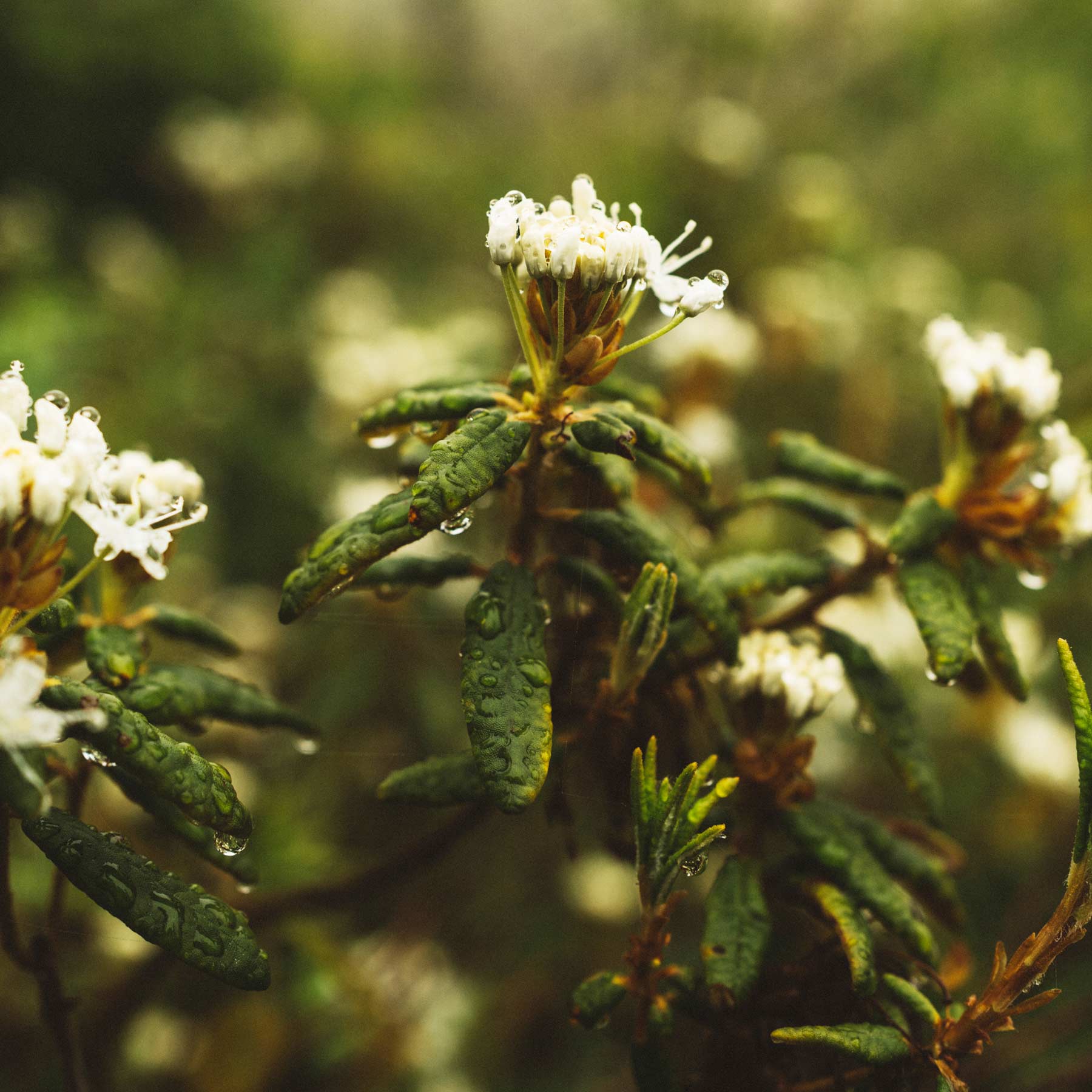
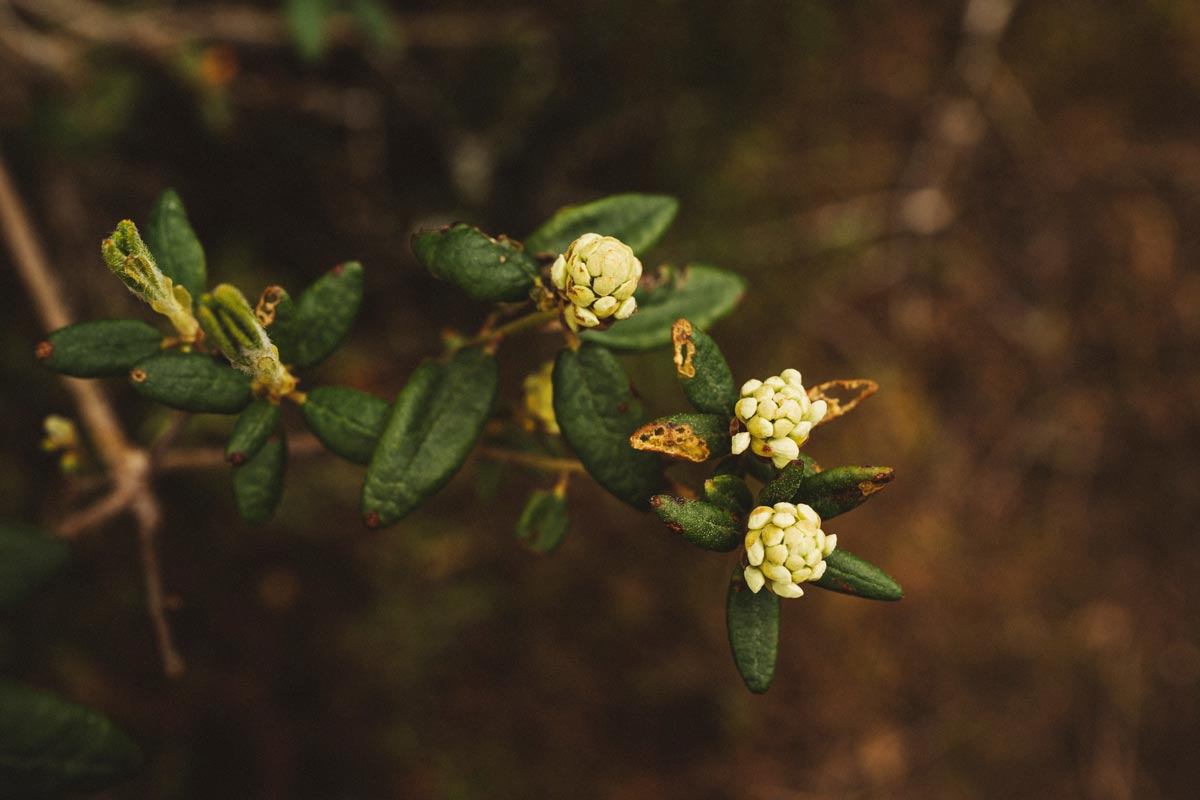
Labrador tea is an upright shrub, typically growing between 30 cm and 1.20 meters tall. Although it can reach over a meter in ideal conditions, it is often found smaller, around 50 cm. It frequently forms dense, intertwined clumps. Its branches are woody and flexible. Its most distinctive feature is its evergreen foliage, which remains on the plant even under snow in winter, ready to catch the first rays of spring sunshine.
What Are the Colors of Labrador Tea?
It's a plant of subtle contrasts. The upper surface of the leaf is dark green, sometimes a little dull or waxy, with a leathery texture. But the real secret lies beneath. The underside of the leaf is covered in a dense, woolly down. On young leaves, this down is white, but it quickly turns a different color. rust or characteristic orange on mature leaves.
It is this rust-colored down that is the most reliable identification criterion. If the underside of the leaf is hairless or pale white without a woolly texture, be wary: it is probably not Labrador tea, and it could be Kalmia (toxic).
What is the Natural Environment of Labrador Tea?
The Rhododendron groenlandicum It is a native species with a vast distribution area: it extends from Greenland to Alaska, covering almost all of Canada and reaching down into the northern United States. It is a plant that has co-evolved with boreal ecosystems.
Its preferred habitat? Acidic and moist environments. It thrives where few other plants survive. It is found in large quantities in bogs, sphagnum bogs, and coniferous undergrowth, particularly under black spruce and tamarack. It likes to have "wet feet" or at least to grow in cool soil rich in undecomposed organic matter (peat).
To understand the specific forest ecology in which this plant grows, the government website on the Comparison of tree species offers a fascinating glimpse into its natural environment.
What Are The Characteristics of Labrador Tea? (Leaf, Flower, Fruit)
-
Leaves : They are alternate, elongated, with the edges distinctly rolled downwards (what is called the revolute margin). This shape helps the plant retain its moisture.
-
Flowers: In spring (June-July), the shrub is adorned with magnificent umbels of small, five-petaled white flowers. They are very fragrant and attract many pollinators.
-
Fruit : After flowering, the flowers give way to small, dry, brown capsules that point downwards (unlike the fruit of the Kalmia, which points upwards), releasing tiny seeds.

How to Harvest Labrador Tea
Wild harvesting is an art that requires responsibility and knowledge. At Floèm, our harvesters are trained to respect the resource so that it can regenerate year after year.
Where Does Labrador Tea Grow and Where Is It Harvested?
As mentioned, it is primarily harvested in boreal regions, far from sources of urban or industrial pollution. It is crucial not to pick it near roads to avoid heavy metals. Harvesting often takes place in hard-to-reach areas, ensuring the purity of the product.
Which Part of The Labrador Tea Should Be Harvested and In What Quantity?
The leaves are the main part harvested. Although the flowers are edible and very aromatic, they are short-lived. For sustainable harvesting, the rule of thirds is applied: never pick more than one-third of the leaves from a single plant, and never harvest all the plants in a colony. This allows the shrub to continue photosynthesizing and survive the winter.
"When is the Labrador tea harvest time? The ideal time is often late summer or early autumn, when the leaves are mature and full of essential oils, but it can be harvested year-round (even in winter under the snow, although less convenient!). The tender new green shoots in spring are more fragile and have a different, less resinous taste.
What Tools Should Be Used To Harvest Labrador Tea?
The best method remains hand-picking. No heavy machinery is needed, which preserves the tranquility of the forest. A simple pair of garden shears or a delicate hand-picking (by pinching the stem) is all that's required. At Floèm, manual harvesting ensures immediate sorting: no damaged leaves or other unwanted plants end up in our baskets.
What Are The Transformation Methods?
Once picked, Labrador tea must be processed quickly to preserve its qualities. It's a race against oxidation and humidity.
Factors Affecting the Quality of Labrador Tea
Quality depends on the terroir (drier soil will produce smaller leaves with a higher concentration of aromas) and the speed of handling after harvesting. A leaf left to heat up in a pile in a plastic bag will begin to ferment and lose its boreal freshness.
The Harvest Season, The Processing…
The chemical profile changes with the seasons. An autumn harvest will be richer in ledol and tannins, offering a more full-bodied taste, while a spring harvest will be milder. The transformation process at Floèm aims to stabilize these profiles to offer a consistent taste.
What Can Affect The Quality of Labrador Tea?
The number one enemy is mold. Because the leaves are thick and contain water, they must be dried thoroughly. Direct sunlight during drying can also burn the delicate essential oils ("sunburn"), making the tea taste bland.
How To Dry Labrador Tea?
Drying should take place in the shade, in a dry and well-ventilated area. Ideally, the leaves should be spread in thin layers on drying racks. The temperature should not be too high (ideally below 40°C) to preserve the volatile compounds. Slow and gentle drying ensures that the leaf retains its beautiful green color on top and its aromas remain intact.
Storing Labrador Tea: Recommendations
Once dried, Labrador tea is a stable product, but it requires some care to last.
How To Store Labrador Tea?
It must be stored away from air, light, and moisture. Lined kraft paper bags or airtight metal tins are ideal. Light degrades chlorophyll and aromas, and moisture can encourage fungal growth.
How Long Can Labrador Tea Be Kept?
When properly stored, it can retain its virtues and taste for 12 to 24 months. Beyond that, it does not become dangerous, but it will lose some of its aromatic intensity ("blandness") and medicinal properties.

Traditional and historical medicinal uses of Labrador Tea
To understand why we value this plant so much, we need to look back. Labrador tea is not a modern discovery, it's a rediscovery.
Labrador Tea in Ancestral Practices
The First Nations of North America maintain a spiritual and pragmatic relationship with Rhododendron groenlandicum . It is part of the basic pharmacopoeia of many communities.
How Was Labrador Tea Used In The Past?
It was used as an infusion to treat a host of ailments: colds, dizziness, heartburn, and kidney problems. Ointments were also made from it to treat burns and insect bites. Some tribes chewed the raw leaves to benefit from their effects, although the taste was very intense.
What Were The Culinary Uses of Labrador Tea?
Although primarily medicinal, it was also used as a condiment. The leaves could be used to season boiled meat, sometimes masking the strong or gamey taste. It was occasionally used as a natural preservative due to its antibacterial properties.
The Religious or Spiritual Use of Labrador Tea
In some cultures, the smoke from Labrador tea (burned like incense) was used to ward off evil spirits or purify a place, much like sage. It was believed to promote mental clarity before important counseling.
The Cultural Significance of Labrador Tea
It represents survival. Capable of providing vitamin C (although the heat of the infusion destroys some of it, the raw leaves contain it), it has helped prevent scurvy. It is a revered plant, one that is not picked without giving thanks to the earth.
The Health Benefits of Labrador Tea
Interest in Labrador tea goes far beyond simple botanical or gastronomic curiosity. It's a versatile plant that finds its place both in the natural medicine cabinet and in the pantry.
For those wishing to delve deeper into scientific data and global ethnobotanical practices, the database Plants For A Future offers a complete technical data sheet on the properties of the Ledum groenlandicum .
Properties and Effects of Labrador Tea on The Body
The plant contains flavonoids, tannins, and especially terpenes (such as ledol and palustrol). It also contains ursolic acid, known for its anti-inflammatory properties.
What Are The Properties of Labrador Tea?
It is recognized as having certain properties:
-
Antioxidants: Helps fight against cellular aging.
-
Anti-inflammatories: Relieves joint pain and headaches.
-
Antimicrobials: Effective against certain bacteria.
-
Antispasmodics: Soothes digestive spasms.
Benefits of Labrador Tea by Category
Labrador Tea For The Respiratory System
This is its most well-known use. It helps to loosen bronchial secretions. In cases of colds, flu, or mild bronchitis, a hot herbal tea helps to clear the airways and soothe coughs.
Labrador Tea for Digestion and Metabolism
After a heavy meal, it helps the liver function and soothes bloating. Some naturopaths suggest it for regulating blood sugar levels, although diabetics should consult their doctor before using it intensively for therapeutic purposes.
Labrador Tea For Sleep and Relaxation
Is it safe to sleep with a labradorite stone? (Another common confusion with the stone, which is supposed to aid in dreaming). But for the Tea , the answer is: yes, it helps you sleep! Thanks to its mildly sedative and relaxing properties, it's excellent for combating insomnia and stress. It's the perfect herbal tea for the evening.
Is it good to drink rooibos every day? Compared to rooibos, which is also caffeine-free and rich in antioxidants, Labrador tea can be drunk regularly, but in moderation due to its potent active compounds (see precautions). Rooibos is more neutral, while Labrador tea is more medicinal.

How To Consume or Use The Labrador Tea Ingredient?
Incorporating Labrador tea into your daily routine is simple, but requires some know-how to get the most out of it without risks.
Various Forms of Labrador Tea Products
Labrador Tea As An Herbal Tea
Loose (whole leaves) or in bags (often broken). At Floèm, we prefer whole or roughly chopped leaves to preserve the oils until the time of infusion.
Labrador Tea In The Kitchen
Labrador tea powder, flavored salt, and grilling spice mixes incorporating the plant are now available.
Labrador Tea In Homemade Body Care
You can macerate the leaves in vegetable oil (sweet almond) for a few weeks to create a soothing massage oil for sore muscles.
Methods For Preparing Labrador Tea: Recipes And Instructions
Recipe Ideas Using Labrador Tea
-
Boreal syrup: Brew Labrador tea strongly, strain, then add an equal weight of sugar. Bring to a gentle boil. Ideal for cocktails (Boreal Gin and Tonic) or on pancakes.
-
Labrador Salmon: Sprinkle crumbled leaves over a salmon fillet with a little maple syrup before baking.
How To Brew Labrador Tea As An Herbal Tea?
There are several ways to prepare Labrador tea, but here's the secret to a perfect and safe cup.
-
Use simmering water (90°C), not boiling vigorously.
-
Put about 1 teaspoon of leaves per cup.
-
How long should the tea be steeped for? Let it steep for a maximum of 5 to 10 minutes.
Why shouldn't you let tea steep for too long? It's a matter of safety and taste. Infusing the leaves for too long (or boiling them in water for too long) extracts too much tannin (making the drink bitter and astringent) and, above all, of Ledol . In high concentrations, ledol can cause cramps, nausea, and even act as a mild narcotic. A short infusion allows the aromas to be extracted without concentrating the toxins.
How Much Labrador Tea Should I Consume?
Moderation tastes much better. One to two cups a day are enough to enjoy the benefits without overloading the body.
Instructions For Using Labrador Tea and Precautions For Use
Like any active medicinal plant, Labrador tea commands respect.
When Is The Best Yime To Consume Labrador Tea?
Ideally in the afternoon or evening for relaxation, or after a meal for digestion.
Warnings About Labrador Tea
Are Labradors dangerous? Is Labrador tea amazing? The term "narcotic" is strong, but the plant contains mild narcotic compounds at very high doses. This is why the leaves are generally not eaten after infusion. What are the disadvantages of owning a Labrador? If consumed in excess (several liters of very strong infusion per day), it can irritate the stomach and intestines.
At-risk Populations and Labrador tea
People taking blood pressure medication or blood thinners should consult their pharmacist, as the plant may interact slightly with these treatments.
Pregnant Women and Children and Labrador Tea
Can pregnant women drink it? As a precaution, it is generally not recommended for pregnant women (especially in early pregnancy due to potentially uterotonic effects) and young children under 6 years old. To find out about all the contraindications for pregnant women, visit this page.
What are the contraindications of tea? Pregnancy, breastfeeding, and young age are the main ones.
Is it good to drink tea every day? For classic tea (Camellia sinensis), yes. For Labrador tea, it is often recommended to have "therapeutic windows" (for example: drink it for 3 weeks, then take a one-week break), to avoid the body becoming accustomed to the active ingredients.

Conclusion: Labrador Tea, A Valuable Ally
Labrador tea is much more than a beverage; it's an experience, a piece of history, and a gift from nature. It embodies the wild flavor of Quebec.
Summary of The Benefits And Uses of Labrador Tea
Everything You Need To Know About Labrador Tea
-
Taste : Woody, lemony, mentholated.
-
Benefits: Relaxing, digestive, respiratory aid, antioxidant.
-
Security : Do not boil for long, drink in moderation, avoid during pregnancy.
-
Identify : The rusty down under the leaf is its signature.
Quality and Respect For The Environment For Labrador Tea
How To Choose A Quality Labrador tea?
Look for whole, bright green leaves with a strong aroma when you open the bag. Choose companies that are transparent about their harvesting methods.
Why Should We Choose Environmentally Friendly Labrador tea And Where Can We Find It?
At the house of At Floèm , we are committed to offering you exceptional quality Labrador tea, hand-picked with the utmost respect for our boreal forests. Choosing Floèm means supporting a local business that values the region and ensures the sustainability of the resource.
Want to experience the purity of the North? Discover our Labrador Tea infusions in our online shop and let the forest come to you.



Leave a comment
This site is protected by hCaptcha and the hCaptcha Privacy Policy and Terms of Service apply.