





Willowherb: benefits, uses, and natural habitat
Introduction to the World of Fireweed
The Quebec boreal forest is a land of contrasts, climatic challenges, and extraordinary resilience. At the heart of these magnificent landscapes emerges a botanical miracle tinged with vibrant magenta: the fireweed. An exemplary pioneer plant, it is the first to heal the earth, offering spectacular waves of flowers that bring life and color back to disturbed ecosystems. For anyone traversing the vast northern territories, the appearance of its immense flowering clusters invariably marks the peak of summer.
At Floèm, our passion lies in discovering and highlighting the wild ingredients of our boreal land. While fireweed first dazzles with its aesthetic splendor, it is its unsuspected richness for overall health, and particularly for the urinary and digestive systems, that makes it an invaluable treasure. Whether through the preparation of an ancient oxidized tea or to benefit from its powerful astringent properties, join us in the fascinating world of fireweed and discover how this majestic herb can illuminate your daily well-being.
Fireweed: An Overview
What is Fireweed?
Fireweed is an impressive perennial herbaceous plant belonging to the Onagraceae family. It thrives majestically throughout the northern hemisphere, dominating open landscapes with its abundant blooms. Nature enthusiasts often ask what is Canada's emblematic flower? While the maple leaf represents the entire country, fireweed (specifically narrow-leaved fireweed) is the official floral emblem of the Yukon territory.
Moreover, if you are looking to know what is Canada's typical plant or what is Canada's endemic flower that best symbolizes the strength of our northern forests, fireweed is often cited at the top of the list. Although it is circumboreal and not strictly endemic to Canadian borders (it also grows in Eurasia), it is one of the most representative plants of our vast forest ecosystem. It acts as a true nurse for the environment, stabilizing fragile soils with its dense root network.

What does Fireweed taste like?
Many curious foragers ask this essential question: can fireweed be eaten? The answer is a resounding yes! Almost all parts of the plant are edible. In spring, young shoots have a delicate, slightly sweet flavor, reminiscent of the subtle taste of green asparagus, with a hint of fresh forest greenery. The flowers, meanwhile, offer a very mild floral aroma, perfect for delicately coloring a plate.
However, the true culinary magic of fireweed is revealed when its leaves are processed. Dried, they have a green, slightly astringent taste, typical of herbal teas. But when rolled and oxidized according to the traditional Russian method (to make what is known as Ivan Chaï), the taste undergoes a spectacular metamorphosis. The tannins transform to offer deep fruity, malty aromas, with complex notes of autumn honey, caramel, and prune, remarkably resembling a refined Asian black tea, but without any trace of theine.
What are the origins and historical overview of Fireweed?
The origin of fireweed is deeply linked to the evolution of Northern Hemisphere forests. But what flower grows after a fire? It is precisely fireweed! This exceptional characteristic defines its entire history: its seeds, buried in the soil or carried by the wind, germinate spectacularly on lands blackened by flames or devastated by a volcanic eruption.
Historically, this plant is a symbol of life triumphing over destruction. In North America, First Nations used fireweed both as a vital survival food during harsh winters and as medicine to heal wounds. Across the ocean, in Russia, the city of Koporye made it the center of a colossal international trade in the 18th and 19th centuries, exporting its oxidized leaves throughout Europe under the name "Koporye Tea."
The Main Benefits of Fireweed: Edible, Medicinal, Wellness
Fireweed Tea
Infusing fireweed leaves represents one of the most respected herbal traditions in boreal regions. But how is fireweed used in this form? It's simply done. The leaves, whether green or oxidized, are simply steeped in hot water. Green fireweed tea, which is very astringent, is generally used therapeutically to soothe specific ailments.
Conversely, oxidized fireweed tea (Ivan Chaï) is consumed for pure gastronomic pleasure and comfort. This herbal tea has the great advantage of offering the coppery color and robust mouthfeel of a classic black tea, making it a perfect substitute for people wishing to reduce their caffeine consumption without sacrificing the ritual of a powerful hot drink in the morning.
Fireweed in Cooking
In forest gastronomy, fireweed is an invaluable resource. Young spring shoots, before they become woody, are steamed and enjoyed as a side dish, rich in vitamins A and C. The white pith found in more mature stems, very rich in mucilage, can be scraped to act as a natural and nourishing thickener in soups and stews.
The magenta flowers of fireweed are, for their part, the darlings of Quebec chefs. By macerating them, radiant pink syrups or magnificent floral jellies are obtained. These sweet preparations bring an elegant boreal touch to desserts, cocktails, or simply on a piece of artisanal cheese.
Fireweed for Health
If one seeks to know what are the virtues of fireweed, one quickly realizes its versatility. Historically, some legends describe it with such praise that one wonders: what plant heals everything? Of course, no plant is a universal and magical panacea. Nevertheless, fireweed comes close when it comes to treating inflamed mucous membranes.
From the mouth to the intestines, including the male and female genitourinary system, fireweed acts as a natural "firefighter." It extinguishes inflammation wherever it is found, tightens damaged tissues thanks to its tannins, and leaves a soft protective film (mucilage) to allow the body to regenerate peacefully.
Fireweed for Wellness (Aromatherapy and Body Care)
The cosmetic industry is currently enthusiastically rediscovering fireweed. Its powerful antioxidants, particularly oenothein B, make it a choice ingredient for fighting premature skin aging and soothing reactive skin or skin prone to rosacea.
A question often arises in the field of natural beauty: what are the benefits of fireweed for hair? It is an exceptional sebum regulator. Incorporated into hair lotions or natural shampoos, fireweed extract soothes irritated scalps, relieves intense itching, and effectively helps reduce the appearance of dandruff related to hyper-seborrhea or local skin inflammation.

All About Fireweed Ingredient
Fireweed: Botanical Name, Synonyms
The Scientific Name and Etymology of Fireweed
Botanically, the plant was long known as Epilobium angustifolium L. (given by Carl von Linné). More recent taxonomic studies have sometimes reclassified it under the genus Chamerion angustifolium or Chamaenerion angustifolium. Its Greek-derived name combines epi (on) and lobos (lobe or pod), precisely evoking the structure of the flower that seems to sit atop a very elongated ovary resembling a pod.
What is the common name of Canadian fireweed? In Quebec and the rest of French-speaking Canada, it is commonly called "épilobe à feuilles étroites" (narrow-leaved fireweed). This precision angustifolium ("narrow-leaved") is crucial, as it distinguishes it from many other smaller fireweed varieties or those living in wetlands.
Where does the name Fireweed come from and what are its other common names?
The vernacular names of fireweed all tell part of its story. In English, it is universally known as Fireweed. This nickname suits it perfectly, as it is, as we have seen, the first to colonize and bloom profusely in areas devastated by fire, repairing the burnt earth.
In our Quebec countryside, it is sometimes given more poetic and visual nicknames. It is called "flowering willow," due to its long, thin leaves that resemble those of willow or osier. It is also called "red bouquet" for its majestic inflorescences, or "forest asparagus," in homage to its spring culinary use.
Where does Fireweed come from? (indigenous origin)
This robust plant has a circumboreal distribution: it is found in almost all boreal, temperate, and even arctic zones of the Northern Hemisphere, including North America, Europe, and Asia. In Quebec, narrow-leaved fireweed is a 100% indigenous species that has naturally belonged to our biological heritage since the end of the last glaciation.
It is also not uncommon to see fireweed blooming in extremely difficult conditions, on poor mineral soils or in industrial wastelands. Its global conservation status is classified as "Least Concern," which indicates a reassuring abundance of the species in the wild.
Detailed Description of Fireweed and Natural Habitat
What does Fireweed look like? (visual and form)
Fireweed presents itself as a tall, upright, unique, and generally unbranched stem, with a noble and proud appearance. These stems can sometimes form colonies so dense that they completely cover the ground of a clearing. Although it is very characteristic, the untrained eye might confuse it from a distance with Purple Loosestrife (Lythrum salicaria), another large plant with pink flowers in spikes. However, loosestrife grows exclusively in wetlands (marshes, ditches) and its flowers differ structurally from those of fireweed.
Its leaves are arranged alternately along the stem. They are entire, lanceolate (spear-shaped), very elongated, and have a pale and prominent central vein on the back. Interestingly, the lateral veins do not join at the edge of the leaf in the usual way; they form discrete loops before the edge, a distinctive detail prized by botanists.
What are the colors of Fireweed?
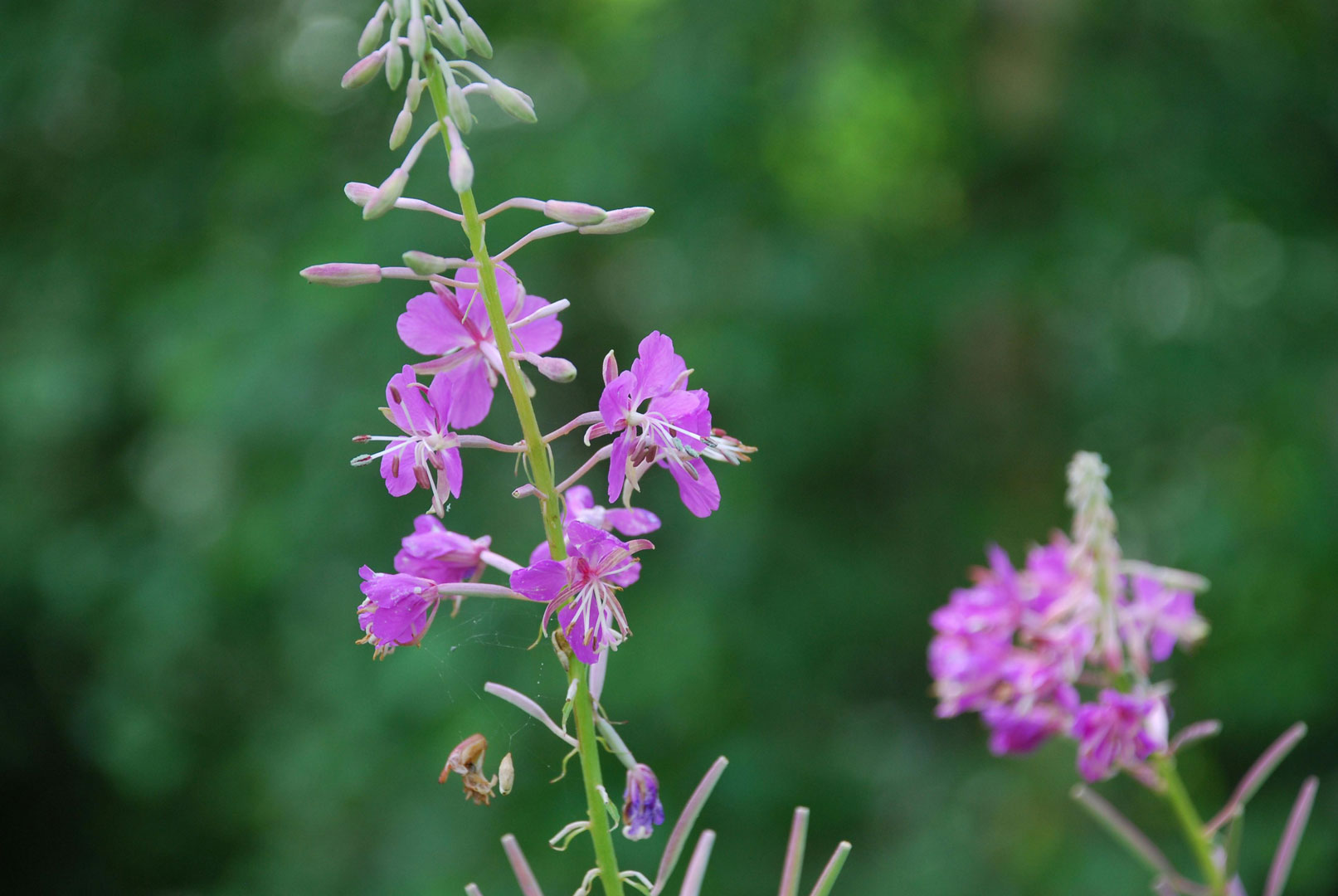
From July, the plant displays a long terminal cluster of spectacular flowers. The petals, four per flower, boast a deep fuchsia to magenta pink color, sometimes subtly nuanced with purple or white in rare specimens. This explosion of color invariably catches the eye, contrasting with the soft green of its foliage and the darkness of the burnt soils it so loves.
What is the size of Fireweed and its natural environment?
Its growth is very rapid, allowing it to easily reach 1.5 to 2.5 meters in height during its full summer development. Faced with this rapid proliferation, some gardeners worry: what are the most invasive plants? A distinction must be made between an "invasive plant" (which is generally a harmful exotic species threatening biodiversity, such as Japanese knotweed) and an "opportunistic or pioneer" plant like fireweed. Although fireweed can spread rapidly in a garden via its creeping rhizome, it is part of the normal ecological succession of our environments and does not destroy the ecosystem; on the contrary, it repairs it for future generations of trees.

What are the characteristics of Fireweed? (leaf, flower, fruit)
The fireweed flower is unique: it has long, prominent stamens and a stigma divided into four characteristic cross-shaped lobes. The ovary, located below the petals (inferior), lengthens considerably throughout the summer to become the fruit.
In autumn, this elongated ovary, resembling a thin reddish-brown pod, opens from the top in four valves. This is when the fireweed releases its true end-of-season spectacle: hundreds of small seeds attached to long white silky hairs (the pappus). Like a cottony cloud, these pappuses allow the seeds to fly away and travel for miles on the autumn winds.
How to Harvest Fireweed
Where Does Fireweed Grow and Where Can It Be Harvested?
To know where to find fireweed, it is often enough to walk through recently opened forest areas. Fireweed loves full light. Look for old clear-cuts, forest road edges, power line corridors and, of course, areas that have experienced brush or forest fires in previous years.
However, to ensure medicinal and culinary purity, harvesting should never be done near busy main roads (as the plant easily absorbs pollutants and heavy metals). At Floèm, our harvesting areas are selected far from any polluting human activity, guaranteeing a 100% natural and healthy ingredient.
Which Part of Fireweed to Harvest and How Much?
When is it advisable to harvest fireweed? It all depends on what you are looking for. For edible young shoots (asparagus-like), harvesting is done very early in spring, in May, when the stem is no more than 20 cm tall. For medicinal use and to make Ivan Chai, the ideal time is in the middle of summer (July-August), when flowering begins in the lower third of the cluster.
The middle leaves of the stem are then harvested, often by taking the upper part of the plant. It is imperative to adopt an ethical harvesting approach by taking only a fraction of the plants in a colony (about 20 to 30%), to allow bees, for whom it is a vital nectar source, to feed there, and for the plant to complete its reproductive cycle through seeds.
What tools to use for harvesting Fireweed?
The stem of mature fireweed becomes surprisingly tough. To harvest the top, using clean pruning shears allows for a clean cut without risking pulling out the underground rhizome, thus preserving the life of the plant.
An ancient and effective technique for harvesting only the leaves consists of firmly holding the top of the stem with one hand, and with the other hand, "zipping" (sliding) the fingers up and down the stem, thus detaching all the necessary leaves directly in the field in one go. The leaves are then gently placed in airy baskets to prevent them from heating up.
What are the transformation methods?
Factors Influencing Fireweed Quality
The concentration of beneficial molecules (tannins, mucilages, flavonoids) is directly related to the amount of sunlight and the harshness of the environment. Fireweed growing in relatively poor soil, under the summer boreal sun, will develop more protective compounds than fireweed pampered in overly rich and shaded soil.
The harvest season, processing…
It is in the transformation that fireweed reveals its greatest art. If the leaves are air-dried as they are, a classic herbaceous tea with a bluish-green color is obtained. But to produce the famous Ivan Chai tea, the freshly harvested leaves undergo a series of meticulous steps. First, wilting (a few hours in the shade), followed by vigorous rolling (by hand or mechanically) which breaks the cell fibers to release the plant's juices. The rolled leaves, which have become sticky, are then placed in piles in a closed container for 24 to 48 hours to undergo powerful enzymatic oxidation. They then change from tender green to coppery brown, releasing an incredible smell of ripe fruit, before finally being heat-dried.

What can alter the quality of Fireweed?
During the oxidation of Ivan Chai, excess stagnant humidity or too long a resting time can cause the foliage mass to mold, ruining the harvest. Conversely, during traditional drying of green leaves or flowers, direct exposure to afternoon sun will literally "burn" the plant, bleaching its colors and evaporating its delicate oils and vitamins.
How to dry Fireweed?
The safest method is to use stacked tray dryers (mosquito nets). Fireweed leaves (or flowers) should be spread in very thin layers to allow air to circulate perfectly. Drying takes place in a dark, warm room (ideally between 30 and 40°C) equipped with good ventilation or dehumidifiers, until the material breaks cleanly under the fingers, ensuring the complete absence of residual moisture.
Fireweed Storage: Recommendations
How to store Fireweed?
Whether green or oxidized, dried fireweed is particularly sensitive to light and humidity variations. The golden rule is an airtight container: glass jars (Mason type) stored in a closed cupboard, Kraft paper bags lined with aluminum foil, or sealed metal boxes.
How long can Fireweed be kept?
Dried green fireweed optimally retains its medicinal freshness for about 1 to 18 months. However, the miracle of Ivan Chai (oxidized fireweed) continues even after drying! Like Pu-erh teas or aged black teas, Ivan Chai has the rare ability to improve with age. Stored in a dry place, its aromas become rounder, lose any residual bitterness, and can become wonderfully complex for 2 to 3 years.
Traditional and Historical Medicinal Uses
Fireweed in Ancestral Practices
How was Fireweed used in the past?
In First Nations pharmacopoeia, fireweed was a plant of paramount importance for treating digestive and skin emergencies. A strong decoction of the root and leaves was drunk to almost instantly calm acute colic and dysentery. For external use, poultices of crushed fresh leaves were applied to bruises, infected wounds, and severe burns to draw out infection and promote tissue regeneration.
What were the culinary uses of Fireweed?
In addition to consuming young shoots in spring, some nations harvested and boiled fireweed roots for sustenance during times of scarcity. But its most widespread culinary use, particularly in Eastern Europe and Siberia, was its role as an excellent tea substitute. Before Asian teas dominated the global market, Koporye tea (made from fireweed) flowed freely in Russian samovars, warming rural homes as well as the aristocracy.
The Religious or Spiritual Use of Fireweed
Due to its life cycle linked to fire, fireweed carries strong spiritual symbolism. It represents the "Phoenix" of the plant world. On an energetic level, it is associated with concepts of rebirth, forgiveness, and healing of deep traumas (like the forest healing after a fire). It teaches that even after the greatest destruction, beauty, strength, and gentleness can re-emerge from the blackened soil, offering a profound message of hope in various shamanic traditions.
The Cultural Importance of Fireweed
Beyond its status as the emblem of the Yukon, fireweed is celebrated at summer festivals in the Far North (such as in Alaska) where the end of summer is marked when the first fireweed flowers turn into cottony seeds. It is botanical proof of the tenacity of life in a northern climate.

The Health Benefits of Fireweed
Properties and Effects of Fireweed on the Body
What are the properties of Fireweed?
It is a common and vital question: Is fireweed an anti-inflammatory? Yes, and it is even one of its greatest medicinal assets! So much so that professionals often ask again to insist: Is fireweed an effective anti-inflammatory? Absolutely. This action is carried by specific molecules, notably a rare tannin called oenothein B, as well as by myricetin. These flavonoids and tannins powerfully inhibit enzymes responsible for inflammation (such as cyclooxygenase and lipoxygenase).
Coupled with this remarkable anti-inflammatory action, fireweed is strongly astringent (it tightens swollen tissues and stops minor bleeding), antibacterial (it cleanses the area), and emollient (its mucilages soften irritated mucous membranes, forming a perfect duo with its astringency).
Benefits of Fireweed by Category
Fireweed for Prostate Health
Fireweed is globally recognized as "the prostate plant," popularized by the famous Austrian herbalist Maria Treben. But how does fireweed affect the prostate? It's simple and fascinating. What is the number 1 enemy of the prostate? With age, it is inflammation and benign prostatic hyperplasia (BPH), often caused by hormonal imbalance (especially overproduction of dihydrotestosterone). Fireweed contains oenothein B, which naturally inhibits two enzymes (5-alpha-reductase and aromatase) responsible for gland swelling, thus blocking inflammation at its source.
Therefore, what is the best product to reduce prostate swelling? or what is the best plant to reduce prostate swelling and for prostate health? The unanimous answer in boreal and European phytotherapy is fireweed infusion (especially the species Epilobium parviflorum, but also our great Epilobium angustifolium).
For those seeking other avenues, alternative methods are sometimes mentioned. For example, what is the Japanese method for reducing prostate size? It relies on a diet rich in soy, fish, medicinal mushrooms, and especially green tea, which shares inflammation-inhibiting antioxidants with fireweed. What fruit reduces prostate swelling? Tomato (cooked, rich in lycopene) and pomegranate are excellent allies, and what is the best juice to drink for your prostate? Pure pomegranate juice is fantastic. However, when looking for: how can I cleanse my prostate naturally?, the winning combination remains a healthy diet coupled with a regular course of fireweed tea to soothe tissues and restore optimal urinary comfort.
Fireweed for Women's Health
This plant should certainly not be confined to men alone. What are the benefits of fireweed for women's health? These benefits are innumerable, particularly for the pelvic and digestive systems. Because it is astringent and regulates fluids, fireweed is extremely effective in reducing abnormally heavy menstruation (menorrhagia) by tightening relaxed uterine blood vessels.
Once again, what are the benefits of fireweed for women's health? Beyond menstruation, it is a soothing shield against cystitis (bladder inflammation), common in women. It acts by de-escalating inflammation of the urinary mucosa while exerting an antibacterial action, which quickly relieves the burning sensation during urination.
Fireweed for Urinary Tract Infections and Digestion
If you are wondering what plant to take for a urinary tract infection?, bearberry and cranberry are often cited for eliminating bacteria. But fireweed must absolutely be part of the strategy to treat the inflammatory aspect (the searing pain) of the bladder.
Digestively, willowherb is the sovereign remedy for irritable bowels. In cases of acute diarrhea, ulcerative colitis, or irritable bowel syndrome, drinking a strong infusion of willowherb immediately tightens inflamed intestinal mucous membranes while coating them with soothing mucilage, offering profound relief where other remedies fail.
How to Consume or Use Willowherb?
Different Forms of Willowherb Products
Willowherb as herbal tea
Whether in its traditional "green" form for its pure medicinal virtues or in its oxidized form (Ivan Chai) for a comforting experience with black tea aromas, willowherb is a must in your cup. At Floèm, it is one of our treasures for formulating exceptional boreal blends that combine refined taste and physical well-being.
Willowherb in cooking
Young willowherb leaves and flowers can be sprinkled raw over your dishes or incorporated into homemade vinegars. Their slight astringency particularly enhances stews, offering a wild alternative to classic herbs.
Willowherb in homemade body products
For skin or scalp care, you can make a strong decoction of willowherb leaves, let it cool, then use it as a toning lotion after cleansing your face, or as a final rinse on your hair to regulate sebum and tame redness.

Willowherb Preparation Methods: Recipes and Instructions
Recipe ideas with Willowherb
Sweet-lovers, try the "Boreal Latte"! Infuse 2 teaspoons of oxidized willowherb (Ivan Chai) in half a cup of very hot water for 10 minutes to obtain a concentrate. Fill the rest of the cup with hot frothed oat milk, and sweeten generously with maple syrup. A woody, caffeine-free treat, perfect for snuggling up in winter.
How to infuse Willowherb as herbal tea?
For a green willowherb herbal tea for medicinal purposes (digestive problems, prostate): put 1 to 2 teaspoons of dried leaves in a cup (250 ml) of simmering water (about 90°C). Cover the cup to prevent the precious volatile components from escaping and let infuse for 10 to 15 minutes.
For Ivan Chai (oxidized), 5 to 7 minutes of infusion are enough to develop its gourmet caramel aromas.
How much Willowherb to consume?
To achieve a therapeutic effect, what is the duration of willowherb treatment? For prevention or to maintain prostate health, drinking 1 to 2 cups of the infusion per day is recommended. For an acute condition (such as colitis or benign prostatic hyperplasia), an intensive cure usually lasts for a duration of willowherb treatment of 3 weeks to 1 month (at a rate of 2 cups per day, morning and evening), followed by a one-week break to allow the body to self-regulate.
Willowherb Use Tips and Precautions
When to consume Willowherb?
Caffeine-free, willowherb can be consumed from morning to night. If you are using it to relieve intestinal issues, drinking the herbal tea on an empty stomach or one hour before meals optimizes its astringent and protective effect on the mucosa. If it's oxidized tea for pleasure, any time is perfect!
Warnings regarding Willowherb
Let's address the safety question: what are the side effects of willowherb? or more simply, what are the side effects of willowherb? Willowherb is renowned for its exceptional safety of use. It has no known toxicity. The only slight potential inconvenience comes from its richness in tannins. Consumed in very high doses and over a very long continuous period, very astringent green willowherb could cause slight constipation or mild nausea in sensitive stomachs. It is enough to reduce the dose for this to disappear.
Let's make a brief comparative digression to fully understand its advantage: to relieve inflammation, who should not drink willow bark tea? Willow bark contains salicin (the ancestor of aspirin) and is formidable for irritating the stomach, even causing ulcers, and is contraindicated with anticoagulants. Willowherb's great power lies precisely in the fact that it offers major anti-inflammatory relief (via mechanisms other than aspirin) without causing gastric damage or bleeding!
Finally, in the changing world of natural plant legislation, some anxious consumers sometimes ask: which plant will be banned from August 5, 2025? (This type of date often circulates online in connection with revisions of European or Canadian statuses prohibiting certain supplements such as emollient aloe or Ashwagandha in certain forms). Rest assured categorically: willowherb is an ancient, safe and entirely permitted food and medicinal plant, which is not subject to any current or future legal prohibition or restriction.
At-Risk Populations and Willowherb
There are no documented absolute contraindications with willowherb. However, people already suffering from severe chronic constipation should avoid drinking large concentrated quantities, as its astringent action could slightly worsen their symptoms.
Pregnant women and children
Although tradition has not reported any particular dangers for these populations (and it has been used in children for digestive disorders), the universal precautionary principle requires pregnant or breastfeeding women to validate the regular use of any medicinal plant with their health professional. For children, mild willowherb is well tolerated, but the dose will be adjusted proportionally to their body weight.
Conclusion: Willowherb, a Precious Ally
Summary of Willowherb Benefits and Uses
All you need to know about Willowherb
Willowherb (Epilobium angustifolium) transcends its status as a simple wild herb. It is the majestic guardian of our boreal forests, an absolute symbol of resilience after destruction. Medicinally, it offers a helping hand of rare effectiveness in soothing inflamed prostates, calming stomach and bladder pains, and curbing menstrual cycle discomforts. And what about its transformed version into Ivan Chai? A pure gustatory masterpiece, a caffeine-free fruity Nordic tea that challenges the world's greatest tea cultures.

Quality and Environmental Respect for Willowherb
How to choose quality Willowherb?
The medicinal plant market is vast, but not all willowherbs are created equal. Quality willowherb should retain vibrant colors (deep green for dry leaves, traces of bright pink for flowers). If it is oxidized willowherb, it should emit round aromas of dried fruits and caramel, without any olfactory trace of dust or mold, proof of perfect mastery of oxidation and final drying.
Why prioritize environmentally friendly Willowherb and where to get it?
The growing popularity of willowherb must not be a threat to biodiversity, and its harvesting must remain deeply respectful of the natural cycle and pollinating insects.
At Floèm, our commitment is total. Our teams of passionate harvesters hand-pick willowherb in the vast wild sanctuaries of Quebec, respecting the strict principles of ethical harvesting. We then honor this precious harvest with careful artisanal processing. To introduce willowherb into your daily wellness ritual, whether for your health or for the pure indulgence of a boreal tea, visit our online store. Support Quebec savoir-faire and let the resilience of Fireweed infuse into your cup!








Leave a comment
This site is protected by hCaptcha and the hCaptcha Privacy Policy and Terms of Service apply.