





Linden: benefits, uses, and natural habitat
Introduction to the World of Linden
Linden: Overview
What is Linden?
Linden is much more than a simple ornamental tree that one encounters in a park or a majestic forest. Many people often wonder: Is linden a good tree? The answer is a resounding yes. As a pillar of the boreal and North American flora, the American linden (Tilia americana) is a deciduous tree of exceptional generosity. It not only offers dense shade thanks to its imposing foliage, but it is also at the heart of multiple medicinal and culinary traditions thanks to its flowers, leaves, and even its sap.

A true treasure of our land, the Linden stands as a silent guardian of ecosystems. At Floèm, we hold a particular admiration for this tree, every part of which seems to have been designed for human and animal well-being. From its ability to nourish pollinators at the end of June, to its much sought-after soothing properties, linden is a raw and precious ingredient that brilliantly celebrates the richness of the flavors and natural remedies of our lands.
What does Linden taste like?
When one ventures to taste an infusion of linden flowers, it is a true floral poetry that invades the palate. The taste of this ingredient is renowned for its honeyed sweetness, almost sugary, with subtle herbaceous notes and a slight roundness on the finish. This natural sweetness comes from the mucilage and essential oils trapped in the delicate creamy yellow flowers. It is a comforting flavor, instantly evoking warm early summer days and the gentle touch of the sun on the skin.
Beyond the flowers, young raw leaves offer a surprising taste experience. They have a sweet, very green flavor, and a tender but slightly mucilaginous texture. This characteristic makes them extremely pleasant to incorporate into spring salads, offering a delicate chew that contrasts with crisper greens. At Floèm, we make it a point of honor to capture these natural aromas in their purest form, so that every sip or bite faithfully reflects the soul of this exceptional tree.
What are the origins and historical overview of Linden?
The history of linden is deeply rooted in the ancestral practices of the peoples of North America and Europe. For millennia, this tree has been perceived as an inexhaustible source of materials and remedies. First Nations commonly used the inner bark of American linden to extract extremely strong fibers. These fibers, once retted and boiled, were used to make ropes, fishing nets, and even clothing. It was a survival tree, essential to daily life.

Beyond its utilitarian aspect, linden has always been associated with healing and appeasement. Historically, herbalists considered its flowers and bark as panaceas to soothe troubled minds and heal bodily ailments. Whether to treat burns with poultices of inner bark or to relieve nervous tension with a warm infusion, linden has spanned the ages, maintaining its reputation as a nourishing and healing tree, a philosophy that we passionately perpetuate at Floèm.
The Main Interest of Linden: Edible, Medicinal, Wellness, etc.
Linden in herbal tea
Linden tea is undoubtedly the most famous use of this fascinating tree. But does linden tea make you sleep? Absolutely. Prepared from fresh or dried flowers and their bracts, this infusion is globally recognized for its powerful sedative and antispasmodic properties. It calms the central nervous system, thus preparing the body and mind for restorative rest. It is the quintessential nightcap for those who struggle to fall asleep after a long day.
However, its gentleness should not mask its power. This beautiful golden-yellow drink diffuses captivating aromas that act almost immediately on accumulated tensions. By integrating it into your evening rituals, you benefit from a perfect synergy between the olfactory comfort of its essential oils and the biochemical action of its flavonoids. It is a celebration of well-being, simply accessible by simmering a little water.
Linden in cooking
The culinary exploration of linden holds surprising discoveries. Beyond herbal tea, the tree offers several edible parts. Young leaves, harvested in early spring, are succulent raw or lightly sautéed, providing a mucilaginous texture beneficial for digestion. Even more surprisingly, linden sap can be harvested and consumed as a refreshing drink, or even concentrated into a sweet syrup, reminiscent of Quebec's maple traditions.
There is also a well-kept culinary secret: a paste made from ground fruits and flowers can create a truly amazing chocolate substitute. Although its large-scale commercialization is complex due to its delicate preservation, it is a gastronomic curiosity that wild harvesting enthusiasts love to experiment with. Thus, from natural syrup to forest salad, linden is a true suspended pantry.
Linden for health
If one wonders what does linden heal?, the answer is vast, as its medicinal profile is impressive. Traditionally, linden is used to relieve respiratory ailments, feverish colds, and catarrh. Thanks to its diaphoretic properties, it promotes sweating, thus helping the body to expel toxins during flu-like states. Its virtues also extend to the digestive sphere, soothing heartburn and cramps thanks to its antispasmodic action.

The inner bark (or sapwood) also plays a crucial role in phytotherapy. Recognized as a diuretic, it is consumed as a decoction to promote renal elimination and relieve water retention. Externally, leaf poultices have long been used to soothe burns, swelling, and even to accelerate the healing of fractured bones in some traditional practices. Linden is therefore a complete natural pharmacy.
Linden for well-being
The well-being provided by linden goes beyond the simple ingestion of its active principles; it encompasses a deep sensory and aromatic dimension. In aromatherapy or integrated into body products, the scent of linden flowers acts as a balm on the nervous system. Its sweet fragrance reduces agitation, calms nervous migraines, and dissipates digestive tensions related to anxiety. It is an invitation to slow down.
Taking a bath enriched with a strong infusion of linden flowers or applying floral water compresses to tired eyes allows for immediate muscle relaxation. The mucilaginous nature of the plant softens and hydrates the skin, making this ingredient a choice ally for homemade cosmetics. At Floèm, we believe that holistic well-being comes through this intimate and respectful communion with the gifts of our boreal environment.
All About the Linden Ingredient
Linden: Botanical Name, Synonyms
The scientific name and Etymology of Linden
To properly understand a plant, one must look at its scientific identity. The linden that primarily interests us in North America bears the botanical name Tilia americana L., belonging to the family of Tiliaceae (often reclassified today in the family of Malvaceae according to modern phylogenies). The genus Tilia takes its name directly from classical Latin, designating this majestic tree known since antiquity for the tenderness of its wood and the quality of its fibers.

The epithet americana highlights its geographical origin, clearly distinguishing it from its European cousins such as the small-leaved linden (Tilia cordata). This precision is vital, as Tilia americana is distinguished by much larger cordate (heart-shaped) leaves and an often more robust habit, reflecting the immensity of the North American landscapes in which it thrives.
Where does the name Linden come from and other common names for Linden
The French term "tilleul" derives from the Late Latin tiliolus, itself a diminutive of tilia. In popular language and depending on the regions, this tree goes by many other names. In English, it is known as American Basswood, Carolina basswood or American Linden. The term "Basswood" is a corruption of "bastwood," referring to the "bast," which is the tough fiber (phloem) extracted from its inner bark.
In Quebec, it is not uncommon to hear old-timers speak of "bois blanc" (white wood), referring to the light, pale, and easy-to-carve color of its wood. This diversity of nomenclature testifies to the versatility of linden: depending on whether one is interested in its wood, its fibers, or its flowers, the tree has been renamed by artisans, herbalists, and gatherers, thus weaving a rich network of cultural synonyms.
Where does Linden come from? (indigenous origin of Linden)
Many botany enthusiasts ask: Does linden grow in Quebec? The answer is yes, abundantly! Tilia americana is a native North American species whose natural range extends from southern Quebec and New Brunswick, through Ontario, down to Florida and stretching west to Texas and Manitoba. It is a tree deeply rooted in Quebec's forest heritage.
Some also ask: What is the best tree to plant in Quebec? If you have a large space and rich soil, American linden is definitely at the top of the list. Perfectly adapted to local hardiness (zones 3 to 9), it has evolved to withstand our harsh winters while taking advantage of warm summers to offer a spectacular bloom. It perfectly embodies the resilience and generosity of boreal flora, values that strongly resonate with Floèm's mission.
Detailed Description of Linden and Natural Habitat
What does Linden look like? (visual and form)
The American linden is a striking visual spectacle. It is an upright, elegant tree with ascending, arching branches that form an imposing oval to pyramidal crown. When one wonders what is the height of a mature linden?, it is important to know that it can reach up to 25 meters (82 feet) in height and spread up to 12 meters in width under optimal conditions. Its presence truly structures the landscape.
Its foliage is dense and deciduous. Its heart-shaped (cordate) leaves with serrated edges are asymmetrical at their base, a very useful characteristic for identification. The bark of young trees is smooth and light gray, becoming deeply furrowed longitudinally as the tree gains age and wisdom, then offering refuge to countless insects and small forest animals.
What are the colors of Linden?
The color palette of linden evolves wonderfully with the seasons. In spring, young leaves unfurl in a tender, almost translucent green, before darkening to a deep green on top and slightly paler underneath. This duality of green offers a captivating shimmer when the wind gusts through the foliage.
The chromatic apotheosis occurs at the dawn of summer. Flowers appear in drooping clusters of creamy yellow to greenish color, attached to a long, almost fluorescent pale green bract (a modified leaf). In autumn, before falling, the foliage takes on golden yellow hues, illuminating the undergrowth. The small globular fruits, initially green, turn gray-brown as they dry towards winter.

What is the size of the Linden tree and its natural habitat?
The American linden (basswood) is a giant of deciduous forests. With its potential height of 25 meters, it often dominates the secondary canopy or asserts itself in vast open spaces. Does the linden tree grow fast? Yes, its growth is considered rapid, making it an excellent choice for reforestation or creating tree shelters. As for what is the lifespan of a linden tree?, it is estimated that it begins to produce seeds around 15 years of age and can happily live for a hundred years, or even over 150 years in ideal soil.
Its preferred natural habitat consists of rich, deep, and moist soils. It is frequently found in wooded areas, alluvial valleys, and lowlands, where it sometimes forms pure stands. It tolerates various soil types (sandy, silty, clayey) provided they are well-drained and prefers environments ranging from partial shade (such as clear undergrowth) to full sun, while also withstanding strong winds (but not maritime exposure).
What are the characteristics of the Linden tree? (leaf, flower, fruit)
Identifying this tree in nature often raises questions: how to recognize edible linden? The American linden is easily recognized by its immense, heart-shaped leaves, asymmetrical at the base. And are linden leaves edible? Absolutely, especially when they are very young and tender in spring, ideal for adding to your salads thanks to their mild flavor.
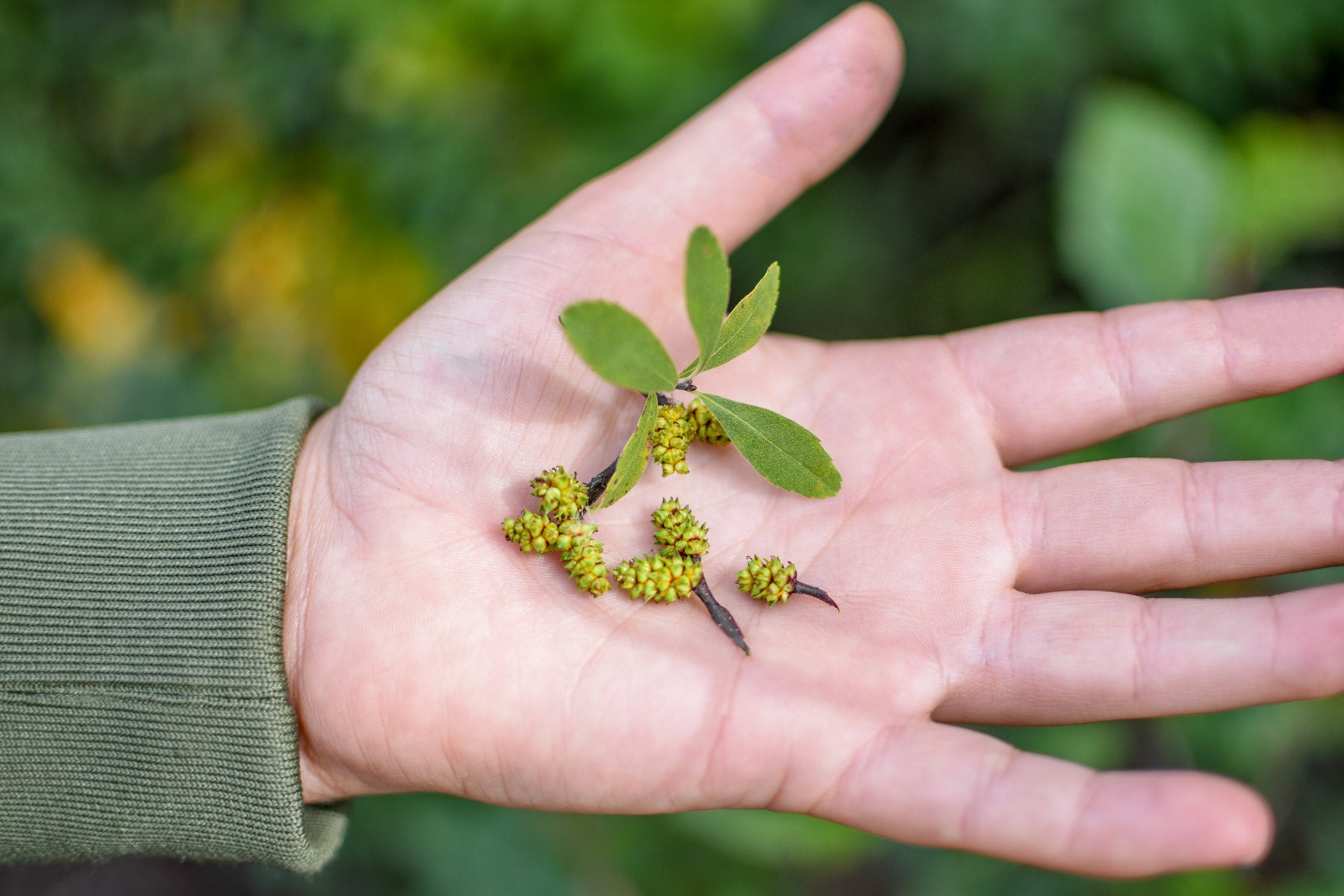
The flower, a true aromatic treasure, appears in clusters of 5 to 10 small fragrant corollas, attached to a unique, elongated, tongue-shaped bract. This bract is also an integral part of the medicinal harvest. Finally, after the fragrant summer flowering, the tree produces a small round fruit, a globular capsule. But can you eat the fruit of the linden tree? Although it is not consumed like a traditional fleshy fruit, the dried fruit, ground with the flowers, can be transformed into a nutritious paste similar to chocolate.
How to Harvest Linden
Where does Linden grow and where is it harvested?
Linden is harvested where it thrives: in moist wooded areas and spacious parks. But for those who wish to have this ingredient within reach, the question arises: where to plant a linden tree in your garden? It prefers rich, deep soil, with plenty of space to spread its crown. So, why plant a linden tree? For its dense shade, its melliferous flowers that attract bees, and its unparalleled medicinal virtues.
However, can you plant a linden tree near a house? and what are the 6 trees that should absolutely not be planted too close to your house? The linden tree is one of the large trees to keep away from foundations, just like willow, poplar, silver maple, ash, and walnut. Are linden roots deep? The linden often has a flat and extensive root system, or sometimes a strong taproot. If planted too close, its moisture-seeking roots and massive spread can cause damage to infrastructure. It is recommended to leave it at least 10 to 15 meters away.
Which part of the Linden to harvest and in what quantity?
Harvesting linden requires precision and respect for the tree. The most prized part is the complete inflorescence: the just-opened flower, the flower bud, and the pale green bract attached to it are harvested. It is crucial to harvest just after the flowers open, as the essential oils are at their peak then. At Floèm, our harvesters hand-select these raw materials, ensuring not to strip the tree bare.
In spring, it is also possible to harvest very young leaves for immediate culinary use. As for the quantity, the golden rule of ethical harvesting applies: never take more than 10 to 20% of the flowers from a single individual to leave enough nectar for pollinators, for whom linden is an invaluable food source.
What tools to use to harvest Linden?
To carefully harvest the flowers, the equipment must be both simple and respectful of the plant. The flower clusters detach easily by hand with a sharp movement at the peduncle, but using small, sharpened pruning shears allows for a clean cut that does not damage the branches. Due to the impressive height of the tree, a stable step ladder or a pole pruner (pruning shears mounted on a pole) is often indispensable for reaching the lower branches.
Tree maintenance raises other questions. When to prune a linden tree in Quebec? Pruning is ideally done in late winter or very early spring, before the sap rises. But should a linden tree be pruned every year? Absolutely not. A linden left to its natural habit develops a magnificent crown. Pruning should only be used to remove dead or diseased wood, or to clear the trunk if necessary (unless it is pollarded or espaliered, which requires strict annual maintenance).
What are the processing methods
Factors Influencing Linden Quality
Several elements determine the medicinal and taste power of linden. The first is the terroir: rich, well-hydrated forest soil will produce flowers brimming with nectar and essential oils. The year's climatic conditions also play a crucial role; a mild spring followed by a warm early summer without excessive precipitation promotes abundant flowering free of mold.
The harvesting method directly influences the integrity of the product. The flowers must be handled with extreme delicacy so as not to wrinkle the bracts, which would cause rapid oxidation, altering their beautiful pale green color. Floèm's quality requirement is based on this meticulous attention to environmental and human factors during each wild harvest.
Harvest season, processing...
The linden harvest window is incredibly short, generally lasting only about ten days, around late June or early July in Quebec, depending on latitude and weather. This is the precise moment when the flowers bloom and release their heady fragrance. Waiting too long means harvesting faded flowers whose properties are greatly diminished.
Immediately after picking, processing must begin. The flowers should never be piled in airtight bags where they risk fermenting and heating. They are spread in very thin layers on drying racks. It is in this respect for nature's frantic pace that we manage to capture the boreal aromatic potential for the coming winter months.
What can alter the quality of Linden?
The quality of linden flowers is particularly fragile. Prolonged exposure to humidity after harvest leads to unsightly browning and the development of mold, rendering the batch unfit for consumption. Direct exposure to sunlight during drying is equally destructive: it volatilizes the precious essential oils (such as farnesol) responsible for its aroma and calming action.
There is also a crucial botanical point to be aware of. It is reported that linden flowers that age on the tree can develop slightly narcotic or toxic properties, which is why they must be harvested when freshly opened. Neglecting this temporal detail is the main cause of quality loss in amateur herbalists.
How to dry Linden?
Drying linden is a delicate art that requires patience and vigilance. To preserve the beautiful pale green hue of the bracts and the soft yellow of the flowers, it is imperative to air dry the harvest in a dark, dry, and exceptionally well-ventilated place. Spreading them on mosquito nets or wooden drying racks allows air to circulate freely around each inflorescence.

The room temperature should ideally be between 25 and 30 degrees Celsius. Never force drying in the oven, as this would "cook" the flower and destroy its therapeutic mucilages. Linden is ready when the flower easily crumbles under the fingers and the bract is brittle like tissue paper. It is then that the magic happens, transforming the fresh plant into a high-quality dry aromatic.
Linden Storage: Recommendations
How to store Linden?
Once perfectly dried, linden flowers and bracts must be protected from their worst enemies: light, humidity, and air. The most effective method is to store them in tinted glass jars or opaque airtight containers. It is crucial not to pack the flowers too tightly so as not to crush the delicate structures that trap the aromas.
Storage in a cool, dry kitchen cupboard or apothecary is ideal. If condensation appears inside the jar during the first few days, it means that the drying was not complete; the plants must then be immediately taken out to prevent mold. At Floèm, our packaging is rigorously designed to maintain this aromatic integrity from the forest to your cup.
How long can Linden be kept?
If drying and storage conditions are strictly followed, dried linden retains most of its medicinal and taste properties for about one to two years. Beyond this period, although it is generally not dangerous to consume, its enchanting fragrance fades and its sedative and antispasmodic action capacity significantly decreases.
To guarantee consistently tasty and effective infusions, it is recommended to renew your linden supplies annually, synchronizing with the natural rhythm of the boreal seasons. This not only allows you to enjoy the full power of the plant but also to celebrate the return of summer and the harvest of these precious raw materials each year.
Traditional and Historical Medicinal Uses of Linden
Linden in Ancestral Practices
How was Linden used in the past?
Before the arrival of manufactured products, American linden was an invaluable resource for First Nations and early settlers. Its inner bark (the bast) was so resistant that it served as the basis for making strong ropes, fishing nets, mats, and even sewing thread. To obtain this fiber, the bark was soaked in water for a long time, then boiled and rubbed on a stick.
Medicinally, the entire tree was used. Healers prepared bark decoctions mixed with cornmeal to make poultices capable of ripening boils and treating skin infections. An infusion of warmed leaves served as an eye wash to clean irritated eyes, and a herbal tea made from the roots was administered as a dewormer. It was a truly versatile tree, a pillar of self-sufficiency.
What were the culinary uses of Linden?
In rudimentary kitchens of the past, linden brought sweetness and nutrition. The tree's spring sap, collected just under the bark, was drunk as a refreshing tonic or gently reduced over fire to create a sweet syrup, an alternative or complement to the famous maple syrup. Young, tender leaves enriched stews or were eaten raw during late winter food shortages.
The creativity of the ancients did not stop there: they had discovered that by grinding the small dried linden fruits with its fragrant flowers, they obtained a rich paste whose taste strangely resembled that of chocolate! Although this paste tended to degrade quickly, preventing it from becoming a major export commodity, it remained a prized local treat and a striking example of wild culinary ingenuity.
The Religious or Spiritual Use of Linden
Have you ever wondered about the linden tree and its magical properties? In Europe as in America, this benevolent shade tree was often associated with protection, love, and justice. Planting a linden tree in the center of a village or near a dwelling was a spiritual act aimed at attracting peaceful energies and warding off lightning and the evil eye.
But what are the powers of the linden tree? Beyond the myths, it was believed to have the power to calm inner conflicts. Sitting against its imposing trunk was said to absorb sorrows and realign the spirit. The aura of serenity emanating from the blooming linden, buzzing with bees, cemented its status as a sacred tree, guardian of forest secrets and bearer of deep peace.
The Cultural Importance of the Linden Tree
Although revered, the tree also arouses some popular mistrust. For example, can you sleep under a linden tree? or why not stay under a linden tree? Urban and rural legend has it that the intoxicating scent of the flowers can act as a powerful narcotic, lulling the sleeper so deeply that they wake up with severe headaches. While it is true that very old flowers on the tree can develop heavy compounds, the danger of a nap is greatly exaggerated!
The other, much more pragmatic reason why it was advised against parking under a linden tree is related to aphids. These insects love the tree and secrete a sticky honeydew that literally rains down on the lower leaves, benches, or cars parked beneath, making everything tacky. Despite these minor inconveniences, the linden tree remains an unwavering symbol of hospitality and community gathering.
Health Benefits of Linden
Properties and Effects of Linden on the Body
What are the properties of Linden?
In terms of herbalism, if we list what are the benefits of linden?, we discover a plant with remarkable pharmacological properties. Linden is primarily an antispasmodic (it calms involuntary muscle contractions), sedative (it soothes the nervous system), and diaphoretic (it stimulates beneficial sweating during febrile states). These actions make it a formidable ally against winter ailments and chronic stress.
Furthermore, thanks to the precious mucilages present in its leaves and flowers, linden has formidable softening and emollient properties (demulcent). It coats and protects irritated mucous membranes, whether in the throat during a dry cough or in the digestive tract. Its sapwood, meanwhile, is strongly diuretic and hypotensive, acting on body fluids in a purifying way.
Benefits of Linden by Category
Linden for the nervous system and sleep
Linden's reputation for sleep is well established, but why does linden make you want to sleep? And why does linden make you sleep? Its flowers contain specific essential oils, notably farnesol, as well as flavonoids that interact with receptors in the central nervous system. They induce gentle relaxation, reducing nervous hyperactivity. So, does linden make you sleep? Absolutely, it facilitates falling asleep without creating brutal addiction.
Faced with modern anxiety, many seek natural solutions: what plant can replace Xanax? Although no plant should substitute for a medical prescription without professional advice, linden, like valerian, is one of the most effective natural remedies for combating agitation and nervousness. So, is linden an antidepressant? It is not clinically classified as such (as St. John's wort can be), but it acts as a powerful mild anxiolytic and a neuro-tonic that dissipates mental gloom and relaxes the body.

Linden for digestion and inflammation
The digestive sphere greatly benefits from the calming action of linden. When anxiety affects the stomach, creating spasms or difficult digestion, flower infusion intervenes to relax the smooth muscles of the intestine. The mucilages soften the stomach walls. But is linden an anti-inflammatory? Yes, to a certain extent. The flavonoids and other phenolic compounds it contains help reduce local inflammation, particularly on irritated mucous membranes.
Some also wonder: is linden good for the liver? Linden sapwood (the inner bark, often taken from wild species) is specifically recognized in European and traditional phytotherapy as an exceptional hepato-biliary drainer. It helps cleanse the liver, stimulates bile secretion, and promotes the elimination of toxins, making the entire tree a global protector of the digestive and excretory systems.
Linden for the cardiovascular system
The relationship between linden and the cardiovascular system is complex and worth exploring. To answer the questions: does linden raise blood pressure? or does linden flower increase blood pressure?, the answer is generally no. On the contrary, linden is traditionally used for its mild hypotensive effects. It helps relax blood vessels by soothing the nervous system, which is very useful in cases of hypertension related to stress or arteriosclerosis.
However, caution is advised. As mentioned in botanical warnings, too frequent, massive, and long-term consumption of linden flower infusions has been associated, in rare cases, with cardiac damage. It is therefore a friend to the heart if consumed judiciously and cyclically, but can become harmful in cases of chronic overdose. Moderation is always key in herbalism.
How to Consume or Use the Linden Ingredient?
Different Forms of Linden-Based Products
Linden in herbal tea
Herbal tea remains the purest way to enjoy the floral benefits of the tree. But when it comes to herbal classics, a question often arises: chamomile or linden, which is better? And are linden and chamomile the same thing? No, these are two very different plants. Chamomile (Matricaria) is a small flower with apple notes, focused on digestion and gastric soothing, while linden is a large tree with a honeyed and woody flavor, focused on the central nervous and vascular systems.
The best depends on your needs! For a stomach ache or colic in children, chamomile excels. For stress-related insomnia, nervous palpitations, or the desire for a highly floral sweet drink before bed, linden is unrivaled. You can even combine the two to create an absolute calming synergy, a very common practice for evening infusions.
Linden in cooking
Incorporating linden into modern cuisine is a fun and delicious way to explore boreal aromatics. Spring leaves, before they become too tough, can be used as a base for forest pestos or chopped into salads for their slightly sticky texture that naturally binds vinaigrettes.
The flowers, meanwhile, are wonderfully suited for infusion in milky liquids. Infusing linden flowers in milk or cream allows you to create incredibly delicate wild honey-flavored panna cottas, crème brûlées, or ice creams. Let's not forget the fun experience of lightly roasting the fruits with the flowers to try and get that famous chocolate-flavored paste, a culinary challenge for nature enthusiasts!
Homemade linden body product
The emollient properties of linden make it a choice ingredient for homemade cosmetic care. A very concentrated infusion of flowers and leaves can be cooled and used as a tonic lotion to soothe sensitive skin, prone to redness or sunburn. The mucilages form a very soft protective and moisturizing film on the surface of the epidermis.
Furthermore, linden leaf infusion has historically been used as an eyewash (collyrium) to calm irritation and mild conjunctivitis. In the form of a poultice, crushed leaves relieve minor burns and swollen areas. Creating your own linden-infused ointment allows you to keep a calming balm in your family pharmacy all year round.

Linden Preparation Methods: Recipes and Instructions
Linden recipe ideas
To awaken your taste buds to the boreal flora, try linden lemonade. Infuse a good handful of linden flowers in a liter of boiling water, let cool, then add the juice of two lemons and a little honey or maple syrup. Serve chilled: it's the perfect summer drink, both refreshing and relaxing.
Another wonderful recipe is linden syrup. Simply make a strong decoction of flowers, filter, then add the equivalent weight of sugar to the liquid. Simmer until syrupy. This divine syrup can sweeten your winter herbal teas, top pancakes, or flavor a non-alcoholic cocktail, instantly bringing the sweetness of a Quebec summer to your table.
How to infuse linden in herbal tea?
Preparing linden herbal tea properly requires a little attention. The water should not be vigorously boiling, as too high a temperature (above 90°C) risks deteriorating the precious essential oils contained in the flowers. Pour simmering water over a nice pinch of dried bracts and flowers (about 2 to 3 grams for a 250 ml cup).
Cover your cup with a small lid or saucer. This prevents volatile active ingredients from evaporating with the steam. Let infuse for 5 to 10 minutes depending on the desired intensity, then strain. The resulting liquor should be golden yellow, exuding a warm and honeyed fragrance, ready to soothe your senses.
How much linden to consume?
When one discovers this marvel, it is tempting to make it a daily beverage. Hence the frequent question: is it good to drink infusions every day? or is it good to drink linden every day? In herbalism, the rule is often one of rotation. Consuming one to two cups of linden tea per day for a two to three-week course is excellent for calming a period of stress or regaining sleep.
However, it is not recommended to make it your sole and only daily drink throughout the year. Alternating with other plants (mint, nettle, raspberry) allows for diversifying the intake of active ingredients and avoiding rare phenomena of overdose linked to excessive and uninterrupted consumption of linden.
Linden Usage Tips and Precautions
When to consume Linden?
Timing is essential to maximize the benefits of this plant. Due to its calming and diaphoretic properties, the best time to enjoy a cup of linden tea is at the end of the day or in the evening, about an hour before bedtime. This allows the nervous system time to assimilate the relaxing flavonoids and initiate the soothing process that precedes sleep.
It can also be very useful to consume it at the onset of the first chills or symptoms of a febrile cold, ideally in the evening, well wrapped in a blanket. The warmth of the infusion, combined with the diaphoretic properties of the plant, will promote healthy nocturnal sweating, helping the body fight infection.
Warnings Regarding Linden
It is imperative to address safety. Is linden toxic? and what are the contraindications of linden? Under normal conditions of use, linden is considered very safe. However, what is the disadvantage of linden? or what are the disadvantages of linden? The main danger lies in excess. As highlighted in botanical monographs, frequent and very long-term consumption of tea made from the flowers can cause heart damage in some people.
Furthermore, what are the side effects of linden? In rare cases, allergic reactions (hives, rhinitis) may occur in people sensitive to plants of this family or to pollen in general. Finally, remember that faded flowers left too long on the tree can develop slight narcotic properties, hence the critical importance of controlled harvesting.
At-Risk Populations and Linden
It is necessary to clearly identify who should not drink linden tea? Due to potential risks to the heart during intensive use, people suffering from severe heart disease, rhythm disorders, or severe heart failure should limit or avoid regular consumption of linden, or at the very least, consult a healthcare professional before any treatment.
Moreover, does linden interact with medications? Yes, potentially. Since it has hypotensive and sedative effects, linden can amplify the effects of blood pressure-lowering medications (antihypertensives) or medications acting on the central nervous system (sleeping pills, anxiolytics, antidepressants). Caution always dictates checking these interactions with your pharmacist.
Pregnant Women and Children with Linden
For more vulnerable populations such as pregnant women and children, linden is generally perceived as one of the gentlest and safest herbs. It is frequently used to calm restless children or help reduce a slight fever. A weak infusion is often well tolerated by young children.
However, during pregnancy and breastfeeding, moderation remains key. The effects of plants can be unpredictable during periods of hormonal upheaval. It is therefore always strongly advised to speak with a healthcare professional (doctor, midwife, or qualified herbalist) before introducing any new medicinal plant into the routine of a pregnant woman or a young child.
Conclusion: Linden, a Precious Ally
Summary of Linden's Benefits and Uses
All you need to remember about Linden
American linden is a botanical treasure that has endured through the ages, offering protection, materials, and healing. From its generous foliage to its enchanting honey-scented flowers, it stands out as a choice remedy for soothing the nervous system, relieving digestive tension, and combating winter ailments. It is the tree of tranquility par excellence.
Whether you consume it as an herbal tea to induce sleep, integrate it into your culinary experiments, or enjoy its cosmetic virtues, linden demands to be treated with the respect due to its rank. By understanding its cycles, observing harvesting periods, and keeping usage precautions in mind, it becomes a loyal well-being companion.
Quality and Environmental Respect for Linden
How to choose quality Linden?
Finding a linden that displays all the virtues described in this article requires a bit of discernment. Avoid the yellowish, odorless plant dust sold in some commercial sachets. A quality linden is recognizable at first glance: you should clearly distinguish the flower and its pale green bract, uncrushed, and the whole should exhale a sweet, floral, and honeyed scent even before infusion.
At Floèm, we make it our duty to offer you linden of exceptional purity. Our harvesters, true enthusiasts of Quebec's boreal flora, pick the inflorescence at the exact moment of its blooming. Drying is then carried out using strict artisanal methods to preserve the integrity of the essential oils. Choosing Floèm means choosing the assurance of an authentic and powerful product.

Why prioritize environmentally friendly Linden and where to get it?
Wild harvesting is a privilege that comes with immense responsibilities. Taking flowers from a tree without depleting its reserves or depriving bees of their precious nectar is essential for the sustainability of the ecosystem. Linden harvested with respect for the environment not only guarantees the health of our boreal forests but also ensures traceability and the absence of chemicals or pollutants.
To bring the magic and wisdom of linden into your home, turn to companies that place nature at the heart of their approach. We warmly invite you to purchase our linden infusion and our other wild plant blends directly from Floèm. Come celebrate with us the richness of boreal flavors and transform every sip into a vibrant tribute to the nature that surrounds us.






Leave a comment
This site is protected by hCaptcha and the hCaptcha Privacy Policy and Terms of Service apply.